Where Sin Abounded, Grace Superabounded — Modern Reading

Medieval
Bernard of Clairvaux
1090–1153 · Medieval Latin Catholicism; Cistercian · Burgundy, Champagne, France, and Western Europe
Bernard of Clairvaux was a Cistercian abbot whose preaching helped reshape religious life in twelfth-century Europe. Renowned for his eloquence and spiritual insight, he called Christians to humility, repentance, and a deeper love of Jesus Christ. His sermons on the Song of Songs became classics of Christian spirituality. Bernard also exercised remarkable influence in the affairs of the medieval Church, supporting papal reform, encouraging monastic expansion, and preaching the Second Crusade.
Key Contribution
Bernard inspired a widespread renewal of monastic life and established the love of Christ as a central theme of medieval Christian preaching. His sermons and spiritual writings influenced Christian devotion for centuries.

Sermons by Bernard of Clairvaux
Explore selected sermons from our Classic Sermons collection. For earlier preachers, these videos may be modern readings rather than original recordings.
Where Sin Abounded, Grace Superabounded — Modern Reading
The Three Comings of the Lord — Modern Reading
4:07
The Guardian Angels — Modern Reading
4:04
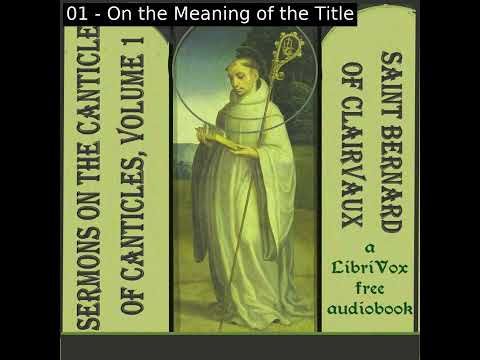 Sermons on the Song of Songs, Part 1 — Homilies 1–21 (English Reading)
Life and Historical Setting
Historical Setting
Bernard lived during a period of major religious and social change in medieval Europe. Monastic reform movements sought to restore simplicity and discipline to religious communities that had accumulated considerable wealth and influence.
The Cistercian order emerged as one of the most important expressions of this reform. Its monasteries emphasized prayer, communal discipline, and a comparatively austere way of life.
The twelfth century also witnessed the growth of cathedral schools, new approaches to theological reasoning, and increasing involvement of the papacy in European political affairs.
Crusading became a prominent feature of Western Christianity after the First Crusade. Religious leaders presented military expeditions to the eastern Mediterranean as acts of devotion and service to the Church.
Bernard participated in nearly all these developments. His career illustrates the remarkable authority that a respected religious preacher could exercise in medieval society.
Biography
Bernard was born in 1090 near Dijon in Burgundy, into a family of the lesser nobility. He received a religious education and developed an early interest in prayer and the spiritual life. Although his family expected him to pursue a conventional aristocratic career, Bernard became convinced that he should enter a monastery.
Around 1112 or 1113, he entered the Cistercian monastery at Citeaux. His decision was remarkable because he persuaded a substantial group of relatives and companions to accompany him. The Cistercian movement sought to recover a simpler and more disciplined observance of the Rule of Saint Benedict.
In 1115 Bernard was appointed to lead a new monastery at Clairvaux. He remained its abbot for the rest of his life. Under his leadership, Clairvaux became a major center of monastic spirituality and helped establish numerous daughter houses.
Bernard believed that the monastic life should be characterized by humility, prayer, manual labor, obedience, and love for God. His preaching encouraged monks to pursue inward transformation rather than merely observe external religious rules.
His reputation soon extended beyond the monastery. Bishops, nobles, and popes sought his counsel. During the papal schism of 1130, Bernard supported Innocent II and traveled extensively to secure recognition of his claim.
Bernard also became involved in theological disputes. He opposed certain teachings of Peter Abelard, believing that speculative reasoning could threaten the reverent understanding of Christian mysteries.
In 1146 Bernard began preaching in support of the Second Crusade. His eloquence helped mobilize participants in France and the German lands. The expedition ended in disaster, creating a serious challenge to his reputation and raising enduring questions about the relationship between Christian preaching and religious warfare.
Despite his involvement in public affairs, Bernard continued to regard monastic life as his true vocation. His sermons on the Song of Songs, developed over many years, expressed his conviction that the deepest purpose of Christian life was loving union with God through Christ.
Bernard died at Clairvaux on August 20, 1153. He was canonized in 1174 and later declared a Doctor of the Church. His spiritual writings remain influential in Catholic and other Christian traditions.
Calling and Central Message
The Call to Preach
Bernard did not initially seek a career as a public preacher. His vocation began with a desire to devote himself entirely to God through monastic life.
His decision to enter Citeaux demonstrated an unusual ability to persuade others. Several relatives and companions joined him, suggesting that his gifts for spiritual exhortation were evident before he became an abbot.
As leader of Clairvaux, Bernard became responsible for instructing and encouraging his monks. His preaching developed from this pastoral responsibility.
Over time, requests for his counsel drew him into the wider affairs of the Church. He came to regard public exhortation as a duty when he believed the unity, faithfulness, or spiritual welfare of Christians was at stake.
Central Message
The central theme of Bernard's preaching was the love of God revealed in Jesus Christ. He taught that Christian faith should move beyond outward religious observance toward an inward transformation of the heart.
For Bernard, humility was the beginning of spiritual growth. A person must recognize dependence upon divine grace before learning to love God with sincerity.
He emphasized the humanity of Jesus, particularly the suffering and compassion of Christ, as a means by which believers could understand divine love.
Bernard also taught that love should mature from self-interest into devotion to God for God's own sake. This progression became a major theme of his spiritual writings.
His message combined personal devotion with the demands of Christian discipline. Prayer, repentance, obedience, and charity were essential expressions of love.
Preaching Ministry and Style
Preaching Ministry
Bernard preached primarily within the monastic community, where his sermons sought to deepen the spiritual lives of those who had committed themselves to religious discipline.
His best-known preaching consisted of extended reflections on Scripture, particularly the Song of Songs. He interpreted the biblical language of love as an expression of the relationship between Christ and the Church and between Christ and the individual soul.
His preaching also reached audiences beyond the monastery. He addressed clergy, rulers, religious communities, and large public gatherings. His influence rested partly upon his ability to adapt his message to different audiences.
Bernard encouraged reform within monastic communities and criticized religious luxury. He believed that wealth and worldly ambition could distract Christians from their calling.
His public preaching became especially prominent during the campaign for the Second Crusade. At Vezelay in 1146, he helped inspire a large gathering to support the expedition. He subsequently traveled through German territories promoting the crusade.
These activities demonstrate both the extraordinary persuasive power of his preaching and the dangers that could arise when religious enthusiasm became closely connected with political and military objectives.
Preaching Style
Bernard was renowned for the emotional force and beauty of his preaching. His language drew extensively upon Scripture, especially the Psalms, the Gospels, and the Song of Songs.
He frequently used the imagery of friendship, marriage, longing, and affection to explain the relationship between the soul and Christ.
His sermons invited listeners to examine their inner motives. Rather than merely instructing them in religious obligations, he sought to awaken a desire for God.
His preaching could also be forceful and confrontational. When addressing theological disputes or matters of church reform, he spoke with great confidence and sometimes considerable severity.
The surviving written sermons are carefully composed literary works. They should not always be treated as verbatim transcripts of his spoken addresses.
Sermons, Revivals and Communities
Notable Sermons and Writings
Sermons on the Song of Songs: Bernard's most celebrated collection consists of 86 sermons interpreting the biblical Song of Songs as an expression of spiritual love between Christ and the Church and between Christ and the soul. The series was developed during the later decades of his life.
Sermon 1, On the Title of the Book: Introduces the Song of Songs as a text requiring spiritual maturity and a heart prepared to encounter divine love.
Sermon 15, The Name of Jesus: Reflects upon the spiritual sweetness and saving significance of the name of Christ.
Sermon 20, Three Qualities of Love: Explores the character of genuine love and its relationship to Christian spiritual growth.
Preaching of the Second Crusade: Bernard delivered public exhortations in support of the crusade, including his famous preaching at Vezelay in 1146. The complete spoken texts of these addresses have not survived as reliable transcripts.
On Loving God: Although a treatise rather than a sermon, this work expresses the central spiritual teaching that shaped Bernard's preaching.
Major Revivals
Bernard was a leading figure in the renewal of Western monastic life during the twelfth century. His preaching attracted new members to the Cistercian movement and encouraged religious communities to pursue greater discipline and spiritual devotion.
His influence was not a revival in the modern evangelical sense. It was a movement of monastic reform that reshaped religious life across much of Western Europe.
His public preaching also generated enthusiasm for the Second Crusade, demonstrating that religious movements could produce consequences far beyond the spiritual renewal of individual believers.
Communities Reached
Bernard's principal community was the monastery of Clairvaux, where he served as abbot and spiritual teacher for nearly four decades.
Through the expansion of the Cistercian order, his influence reached monastic communities throughout France, the British Isles, the German lands, Italy, and other regions of Europe.
His preaching and correspondence also reached bishops, clergy, rulers, and lay Christians. During the campaign for the Second Crusade, he addressed large public audiences.
His written sermons continued to reach readers long after his death, extending his influence beyond the communities that heard him speak.
Controversies and Disagreements
Bernard's career involved several important controversies. His opposition to Peter Abelard reflected a wider medieval dispute concerning the relationship between theological reasoning and religious faith. Bernard feared that certain methods of philosophical inquiry could undermine the authority of Christian revelation.
His support for the Second Crusade remains the most troubling aspect of his public ministry. His preaching encouraged Christians to participate in a military expedition presented as a religious obligation. The crusade resulted in enormous suffering and ultimately failed to achieve its principal objectives.
Bernard also supported the developing ideology of Christian military orders, particularly the Knights Templar. His writings reveal how medieval religious ideals could become intertwined with warfare.
At the same time, Bernard opposed anti-Jewish violence associated with crusading enthusiasm. He intervened against the inflammatory preaching of the monk Radulf, who had encouraged attacks upon Jewish communities in the Rhineland. Bernard defended the principle that Jews should not be murdered or forcibly destroyed.
His record therefore contains important tensions. He defended Jews against particular acts of violence while remaining committed to a theological outlook that regarded Judaism as superseded by Christianity.
His historical legacy must acknowledge both his extraordinary contribution to Christian spirituality and the destructive consequences of religious warfare that he helped promote.
Historical Impact and Lasting Influence
Historical Impact
Bernard helped transform the Cistercian order into one of the most influential religious movements of medieval Europe. The monasteries associated with his leadership became centers of worship, learning, and spiritual formation.
His writings shaped Western Christian understandings of divine love and contemplative devotion. His sermons remain among the most important surviving examples of medieval monastic preaching.
His public influence also demonstrates the extraordinary power that religious preaching could exercise over medieval political and military affairs.
Bernard's legacy is therefore both spiritual and historical. He inspired generations of Christians to seek a deeper love of Christ, while his involvement in crusading reveals the dangers of combining religious conviction with coercive political power.
Lasting Influence
Bernard became one of the most influential spiritual writers and preachers of medieval Christianity. His leadership helped the Cistercian movement expand dramatically during the twelfth century.
His sermons on the Song of Songs shaped Christian reflection upon divine love, contemplative prayer, and the spiritual relationship between Christ and the believer.
Later medieval theologians and devotional writers drew upon his teachings. His emphasis upon the humanity and love of Jesus contributed to developments in Western Christian spirituality.
Bernard was also remembered as an example of the influence that a preacher could exercise beyond the boundaries of a local congregation. His counsel affected popes, rulers, monastic communities, and ordinary believers.
His reputation has endured because his spiritual writings continue to address the desire for a personal and transforming relationship with God.
Representative Statements
In On Loving God, Bernard teaches that God is worthy of love because of who God is, rather than merely because of the benefits that human beings receive.
His sermons on the Song of Songs repeatedly present the Christian life as a journey toward deeper love and spiritual communion with Christ.
These themes express the central conviction of his ministry: genuine Christian devotion must engage the heart as well as the intellect and will.
Recommended Reading
Primary sources: Bernard of Clairvaux, Sermons on the Song of Songs; On Loving God; On Consideration; and selected letters.
Modern studies: Brian Patrick McGuire, Bernard of Clairvaux: An Inner Life; Gillian R. Evans, Bernard of Clairvaux.
Online sermon collection: Sermons on the Song of Songs.
Historical overview: Oxford Bibliographies: Bernard of Clairvaux.
© 2026 AVisitWithJesus