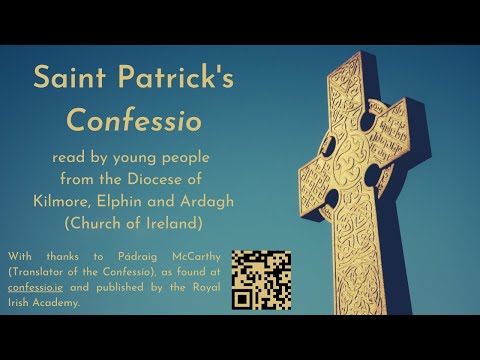
 The Confession of Saint Patrick — Modern Reading

Early Christianity
Patrick of Ireland
5th century · Early Insular Christianity · Roman Britain and Ireland
Patrick was a fifth-century Christian missionary whose preaching helped establish and strengthen Christianity among the peoples of Ireland. Born in Roman Britain, he was captured by Irish raiders as a young man and spent years in captivity. After escaping, he eventually returned to Ireland as a missionary. His surviving writings reveal a man deeply committed to proclaiming Christ, baptizing converts, and nurturing new Christian communities.
Key Contribution
Patrick became the most celebrated missionary figure in Irish Christianity. His ministry helped extend Christian faith into communities beyond the established religious institutions of the Roman world.

Sermons by Patrick of Ireland
Explore selected sermons from our Classic Sermons collection. For earlier preachers, these videos may be modern readings rather than original recordings.
The Confession of Saint Patrick — Modern Reading
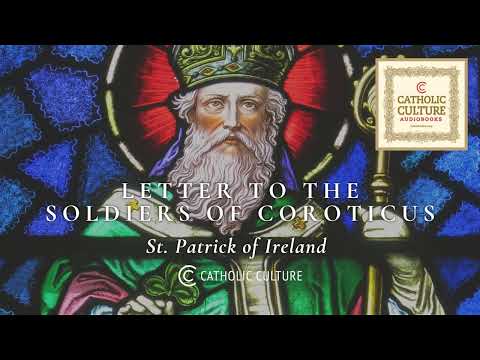 Letter to the Soldiers of Coroticus — Modern Reading
Life and Historical Setting
Historical Setting
Patrick lived during the weakening of Roman political authority in Britain and the development of new political and religious structures across western Europe.
Ireland had never been incorporated into the Roman Empire. Its society was organized around regional kingdoms and kinship networks, with established indigenous religious traditions.
Christianity had reached Ireland before Patrick, but missionary activity during the fifth century contributed to its wider establishment.
Patrick's ministry therefore represents an important stage in the spread of Christianity beyond the former Roman imperial world.
Biography
Patrick was born into a Christian family in Roman Britain during the fifth century, although his precise birthplace and dates remain uncertain. His father, Calpurnius, was a deacon and local official, while his grandfather was a priest.
When Patrick was approximately sixteen, Irish raiders captured him and carried him into slavery in Ireland. He spent about six years tending livestock. During this isolation, he developed a deep life of prayer and came to understand his faith in a new way.
Patrick eventually escaped and returned to his family in Britain. Yet he later became convinced that God was calling him back to Ireland to proclaim the Gospel among the people who had once held him captive.
He returned as a Christian missionary and bishop. His work involved preaching, baptizing converts, encouraging Christian communities, and training believers for religious service.
His mission was not without opposition. Patrick described dangers, criticism, and personal hardship. Nevertheless, he regarded his ministry as an obligation placed upon him by God.
Two authentic writings survive: his Confessio, a defense and spiritual account of his missionary calling, and his Letter to the Soldiers of Coroticus, condemning violence against newly baptized Christians.
After his death, stories about Patrick multiplied. Some preserved genuine memories, while others became legends. His enduring historical importance rests upon his missionary witness and the growth of Christianity in Ireland.
Calling and Central Message
The Call to Preach
Patrick described his calling in deeply personal terms. During captivity he had experienced spiritual renewal through prayer. After escaping, he believed that God was directing him to return to Ireland.
In his Confessio, he recounts a vision in which he heard the appeal of the Irish people calling him to return. He interpreted this experience as a divine summons.
His willingness to return to the land of his captivity became a defining feature of his missionary vocation.
Central Message
Patrick emphasized the worship of the one God revealed through Jesus Christ, the necessity of conversion, and the transforming power of divine grace.
His writings repeatedly express gratitude for salvation and insist that the success of his mission belonged to God rather than to his personal abilities.
He understood evangelism as a calling to bring the Gospel to peoples who had not yet fully encountered the Christian message.
Preaching Ministry and Style
Preaching Ministry
Patrick preached among Irish communities during a period when Christianity was already present in parts of the island but had not become dominant throughout society.
He baptized converts, supported religious instruction, and encouraged the development of Christian leadership. His writings suggest that his ministry reached people of different social positions, including women and members of influential families.
He also defended converts who suffered violence and enslavement. His letter against Coroticus demonstrates his conviction that Christian communities deserved protection regardless of their political or ethnic identity.
Preaching Style
No substantial collection of Patrick's spoken sermons survives. His surviving writings nevertheless suggest a direct and deeply biblical approach to Christian proclamation.
He drew frequently upon Scripture and spoke from personal experience. His emphasis was not rhetorical elegance but the urgency of conversion, baptism, faithfulness, and perseverance.
Patrick presented himself as an imperfect servant entrusted with a mission greater than himself.
Sermons, Revivals and Communities
Notable Sermons and Writings
The Confessio: Although not a sermon, this autobiographical defense preserves Patrick's understanding of his calling and his central message of divine grace.
Letter to the Soldiers of Coroticus: A forceful pastoral condemnation of the killing and enslavement of newly baptized Christians.
No individual sermon texts can be securely attributed to Patrick. Later prayers and addresses associated with his name should not automatically be treated as authentic compositions.
Major Revivals
Patrick did not lead a revival in the later Protestant sense. His ministry was a missionary movement that encouraged conversion and the establishment of Christian communities.
His work helped prepare the ground for the wider development of Christianity in Ireland during subsequent generations.
Communities Reached
Patrick ministered among communities in Ireland, including people who had little direct connection with the established churches of Roman Britain.
His writings indicate that his converts included women, young people, and individuals from different social backgrounds.
Later tradition associated his mission with numerous locations throughout Ireland, although many specific geographical claims cannot be independently verified.
Controversies and Disagreements
Patrick faced criticism concerning his qualifications and conduct as a missionary. His Confessio was written partly to defend his ministry against accusations whose precise circumstances remain uncertain.
Much of the traditional account of his life comes from biographies written long after his death. Stories involving the expulsion of snakes from Ireland, dramatic confrontations with druids, and the use of a shamrock to explain the Trinity cannot be established from his own writings.
Patrick also should not be described as the first person to introduce Christianity to Ireland. Christian communities already existed there, and Palladius had been sent as a bishop to Irish Christians in 431.
Historical Impact and Lasting Influence
Historical Impact
Patrick became an enduring symbol of the spread of Christianity through personal missionary witness.
His surviving writings offer rare firsthand testimony concerning Christian evangelism in fifth-century Ireland. They also reveal a preacher who regarded the protection of vulnerable converts as an essential Christian responsibility.
His historical importance lies not simply in his later fame, but in the missionary commitment that helped Christianity take deeper root in Irish society.
Lasting Influence
Patrick became the principal patron saint of Ireland and one of the most recognizable missionary figures in Christian history.
His ministry contributed to the growth of Irish Christianity, which subsequently developed distinctive traditions of monastic learning, scholarship, and missionary activity.
Although later Irish Christianity cannot be attributed entirely to Patrick, his life became a powerful example of missionary commitment, forgiveness, perseverance, and evangelistic courage.
Representative Statements
Patrick begins his Confessio by describing himself as a sinner and the least of the faithful. This self-description expresses the humility with which he wished his ministry to be understood.
His writings repeatedly attribute his calling and accomplishments to the grace of God.
Recommended Reading
Primary sources: Patrick, Confessio and Letter to the Soldiers of Coroticus.
Modern studies: Roy Flechner, Saint Patrick Retold: The Legend and History of Ireland's Patron Saint; Thomas O'Loughlin, Discovering Saint Patrick.
Online primary texts: Saint Patrick's Confessio, Royal Irish Academy project.
© 2026 AVisitWithJesus